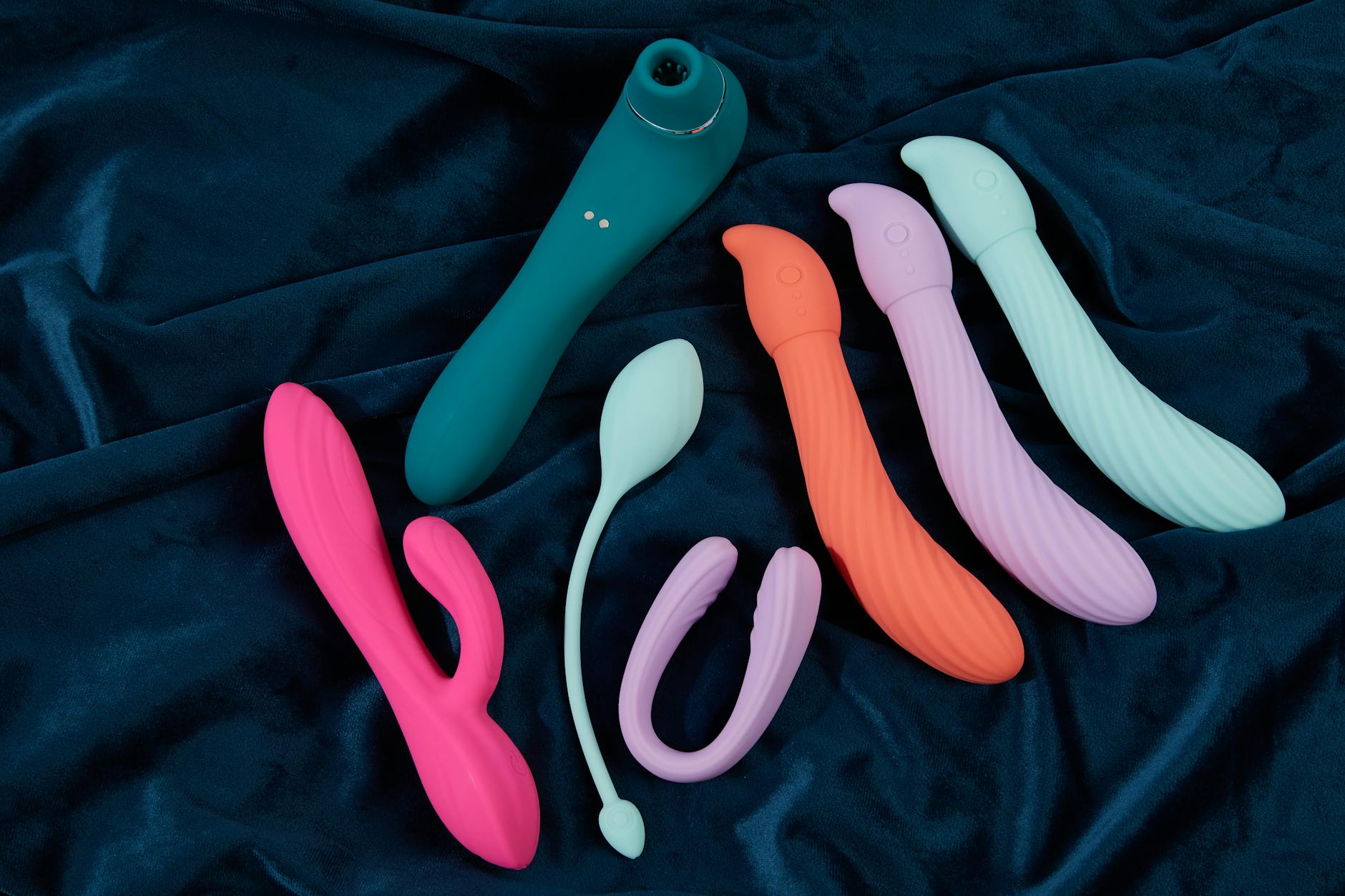
Let's talk about what happens when pleasure stops showing up the way it used to
You've been using the same vibrator for months, or maybe years. It worked beautifully at first. Then one day you realize you need it on a higher setting to feel anything. Then higher still. Now you're at maximum intensity and you're barely registering sensation. This is called clitoral desensitization, and it's wildly common. It's not permanent, and it's not a sign that something is broken inside you.
What's happening is mechanical. Repeated high-intensity vibration fatigues the nerve endings in your clitoris. This is the same reason your hand goes numb if you hold a vibrating power drill for too long. The good news is your nerve endings recover once you change the stimulus. The better news is that lemon vibrators, which use suction instead of vibration, can actually accelerate that recovery.
How vibration creates numbness in the first place
Your clitoris has roughly 8,000 nerve endings packed into a space about the size of a pea. Those nerves fire electrical signals when stimulated. Traditional vibrators work by sending rapid oscillations (usually 40 to 100 times per second) directly into the tissue.
For the first few weeks or months, this feels amazing. Your nervous system hasn't adapted yet. But then something called "neural adaptation" kicks in. Your nerves stop firing as readily in response to the same stimulus. It's the same reason you stop noticing the hum of the refrigerator once you've been in the kitchen for ten minutes.
The problem with vibration specifically is that it's a repetitive, linear stimulus. Your body learns it. The clitoris becomes less and less sensitive to that particular frequency and intensity. You respond by turning up the power. This accelerates the adaptation cycle. Within months, you might find yourself needing settings that once felt overwhelming.
Why suction works differently
Suction stimulation, the technology behind Hello Nancy's Lem and other lemon suction vibrators, activates the clitoris through a completely different mechanism.
Instead of vibrating against tissue, suction gently pulls blood into the clitoral area and creates rhythmic pressure changes. This is closer to how oral sex works, which is why many people find suction feels more natural and intense than traditional vibration alone.
Crucially, suction doesn't create the same adaptation effect as vibration. Your nerves don't habituate to it the way they do to 60 Hz oscillation. Studies on suction-based clitoral stimulators show that users maintain consistent sensation and arousal response over time, even with regular use.
When you switch from a traditional vibrator to a lemon suction vibrator after experiencing numbness, you're introducing your nerve endings to an entirely new type of stimulus. That gives them a chance to recover from the adaptation that built up.
The recovery timeline
Here's what the clinical literature and user experience show.
Week 1 to 2: You might feel slightly more sensation, but it's subtle. You'll notice you can use the suction vibrator on lower intensity settings and still feel it. This is encouraging but not yet full recovery.
Week 3 to 4: The real shift happens here. Your nerve endings begin responding more dynamically. Arousal builds faster. Orgasms return with better definition. Many people report that sensation feels sharper and more localized than it did even before they experienced numbness.
Week 5 to 8: By this point, most people have regained baseline sensitivity and often exceed it. This is when you can reintroduce other types of stimulation if you want. Some people find they're now sensitive to vibration again and prefer to alternate between suction and vibration for variety.
This isn't universal. Some people recover in three weeks. Others take three months. Age, baseline sensitivity, medication, stress, and how severe the numbness was all affect the timeline. But the pattern is consistent: switching from traditional vibration to suction stimulation reliably improves sensation within 4 to 6 weeks.
Why lemon clitoral vibrators accelerate recovery specifically
Not all suction vibrators are identical. The Lem by Hello Nancy has a few features that make it particularly good for sensitivity recovery.
First, the intensity levels are staggered in a way that encourages you to start lower. Many traditional vibrators have intensity steps that jump dramatically (from "barely noticeable" to "intense"). The Lem's gradient is gentler, which means you're more likely to use the lower settings while your sensitivity is rebuilding. This prevents you from falling into the same high-intensity trap that created the numbness in the first place.
Second, the suction cup design creates consistent, sealed stimulation without needing to apply pressure. With a traditional vibrator, you have to press it against your body to feel anything. With a lemon suction vibrator, the seal does the work. You can use it more passively, which also supports the recovery process. Less muscular tension means less fatigue and more sensation.
Third, the pattern variety matters. A good suction vibrator like the Lem has multiple patterns beyond just "vibrate faster." Pulsing, waves, and rhythmic sequences feel different from continuous vibration. This variation alone helps prevent re-adaptation.
The mistake people make when rebuilding sensitivity
You've spent months needing maximum power. When you switch to suction and suddenly feel more with lower intensity, the temptation is strong: try all the patterns, jack up the intensity, push your luck.
Don't. This is how you undo the recovery.
Your nerve endings are waking up. They're fragile right now in a sense, not physically but neurologically. If you immediately push them back into high-intensity territory, you'll re-adapt. It takes discipline to stay at lower or medium intensities for the first month, even though you could technically handle more.
Think of it like coming back from an injury. You can do more than you could on day two. But you don't immediately return to your pre-injury workout intensity. You build back gradually.
Combining suction with good habits
Switching to a lemon vibrator helps, but three other things matter equally.
Take breaks between sessions. Recovery requires downtime. Your nerve endings need 24 to 48 hours of rest between uses to fully reset. If you're using your vibrator multiple times a day, sensitivity recovery slows significantly. Try limiting yourself to three or four times a week while you're rebuilding.
Stay aroused before stimulation. Mental arousal actually primes your nerve endings. When you go straight to the vibrator without build-up, your clitoris is "cold." You'll feel less sensation. Spend 10 to 15 minutes on fantasies, foreplay, or mental anticipation before you reach for the lemon vibrator. Your sensation will be sharper.
Track your sensitivity shifts. Keep a mental note of what intensity level feels good each week. This lets you actually see progress. Many people don't realize sensitivity is returning because they're waiting for it to match some imagined pre-numbness baseline. In reality, you often exceed it.
When to see someone about it
If you follow this approach for eight weeks and sensation hasn't improved at all, that's worth mentioning to a gynecologist or sex therapist. Persistent clitoral numbness can sometimes signal medication side effects, hormonal changes, or neurological conditions that benefit from professional input.
Most of the time, though, switching to a lemon suction vibrator and following the recovery protocol gets you back to full sensation. It's not a permanent loss. It's adaptation, and adaptation can be reversed.
FAQ
Can you completely lose clitoral sensation from using vibrators too much?
No. You can lose temporary sensation through desensitization, which feels catastrophic but is reversible. Permanent nerve damage from vibrator use is extraordinarily rare and would require extreme force or sustained injury. What feels like "lost sensation" is almost always neural adaptation, which means rest and stimulus switching will bring it back.
How do I know if I have clitoral desensitization versus low arousal?
Low arousal usually comes with other signs: you're not mentally interested in sex, you're stressed or disconnected from your partner, or your desire has dropped generally. Desensitization is specific to the vibrator sensation. You might crave intimacy but notice the vibrator just doesn't light you up anymore. Try taking a week off vibrators completely and using your hands instead. If hand stimulation feels noticeably more intense, you've got desensitization. If your hand feels dull too, the issue is arousal or desire, not vibrator adaptation.
Is it okay to use a traditional vibrator again after recovery?
Absolutely, as long as you don't go back to the same high-intensity overuse pattern. Many people find that after recovering sensitivity with a lemon suction vibrator, they can enjoy traditional vibrators again as part of a varied toolkit. The key is rotation and moderation. Use different types of stimulation on different occasions instead of relying on one vibrator every single time.
How soon can I switch back to my old vibrator after using suction?
Wait until sensitivity has clearly returned, which is usually around week 5 to 8. Then introduce it gradually, starting at the lowest intensity you used to use and working up slowly over several weeks. Even better, continue mostly using the suction vibrator and use traditional vibration as an occasional change of pace, maybe once or twice a week.
Does this work if I'm on antidepressants that affect sensation?
Partially. Medications like SSRIs can dampen baseline arousal and sensation independent of vibrator use. Switching to a lemon clitoral vibrator will help, but you might also benefit from working with your doctor or therapist on whether the medication timing, dose, or type can be adjusted. Check out our guide on how antidepressants affect sexual desire and using a lemon vibrator when SSRI medication dampens arousal for more detailed strategies.
Can numbness return after I recover?
Yes, if you go back to the same pattern of high-intensity overuse. The best long-term approach is rotation: alternate between suction and vibration, vary intensity and patterns, and leave at least a day between sessions. Think of it like skincare. You wouldn't use the same harsh product every single day and expect your skin to stay healthy. Same principle with your clitoris.
The path forward
Clitoral numbness is frustrating and feels like permanent damage. It's not. Your nerve endings are adaptable, and suction-based stimulation gives them the chance to recover because it's fundamentally different from the vibration that created the numbness.
Switching to a lemon suction vibrator isn't a quick fix. It's a reset. You're changing the stimulus, giving your nervous system time to adapt to something new, and in the process, you're often recovering sensation that's even better than before. That's not just recovery. That's an upgrade.
If you're ready to start the process, a gentle approach with lower intensities, spacing out sessions, and patience will get you there. Your pleasure is worth protecting. And it's worth rebuilding when it needs it.