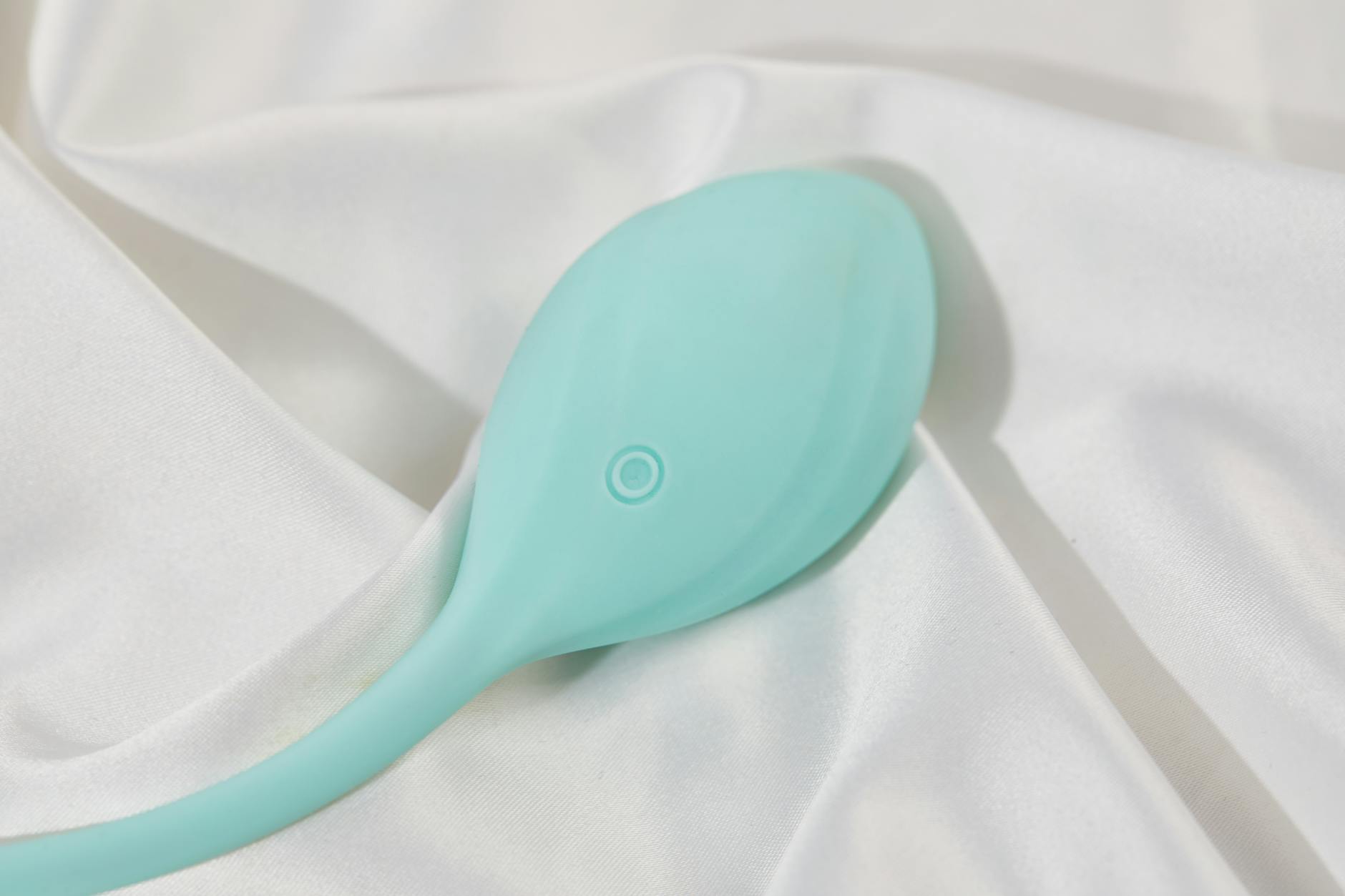
Why your lemon vibrator suddenly feels different
You've been using your clitoral vibrator the same way for years. Then something shifts. The patterns that used to work feel too intense. Or too subtle. Maybe the sensation doesn't build the way it used to. Your first instinct is to blame the toy. But the toy is fine. Your body is talking.
Perimenopause rewires how your clitoris responds to touch. Not because anything is broken, but because estrogen levels are fluctuating in ways they haven't before. This is the part doctors gloss over in a thirty-second conversation, and it's the thing that actually matters for pleasure.
What perimenopause does to clitoral sensitivity
Estrogen doesn't just regulate your cycle. It maintains nerve density, blood flow to genital tissue, and the thickness of the epithelial layer covering your clitoris. As estrogen drops and surges erratically during perimenopause, all three shift.
Your clitoris has about 8,000 nerve endings concentrated in a space smaller than a pea. When that tissue thins, those nerves sit closer to the surface. Sounds good in theory. In practice, it means direct vibration can feel sharp or overwhelming instead of pleasurable. It also means the tissue becomes more reactive to friction, which is why some people develop temporary numbness or sensitivity after use.
The internal clitoral structure also changes. The clitoral bulbs and crura (the internal wings) depend on estrogen to maintain their erectile capacity. As estrogen fluctuates, arousal takes longer to build because these structures fill with blood more slowly. You're not losing capacity for pleasure. You're experiencing a lag in how your body ramps up to it.
Why lemon vibrators work better now
This is where the design of lemon clitoral vibrators becomes genuinely useful. Traditional vibrators rely on rapid up-and-down motion. A lemon vibrator like the Lem uses pulsating suction instead.
Here's the difference: suction stimulates the nerve endings without the same mechanical friction that can irritate thinning tissue. It creates a gentle pressure that gradually intensifies sensation, rather than applying direct shock. For perimenopausal bodies, this pacing matches how your clitoris actually wants to be touched now.
Additionally, suction-based lemon adult toys distribute pressure more evenly across the external clitoris. Instead of targeting one tiny spot intensely, the stimulation spreads. This is gentler on sensitive tissue and paradoxically, often stronger because it engages more nerve endings at once.
If you're switching from a traditional vibrator to a lemon sucker for the first time, you're not downgrading. You're upgrading for your current body.
The estrogen connection: what's actually changing
During perimenopause, your ovaries produce less estrogen, but they don't stop all at once. Levels ping-pong. One week you feel like yourself. The next week, arousal feels completely different. This is frustrating, but it's not random.
The parts of your clitoris that depend most on estrogen are the surrounding tissue and the vascular structures. Less estrogen means less blood flow to the area, which slows arousal and can make sensation feel muted. It also means the tissue has less elasticity, which is why some people experience discomfort with firm pressure.
Your brain's arousal pathways haven't changed. Your capacity for orgasm is still there. What's changed is the scaffolding holding up how arousal builds. Working with that, rather than fighting it, is the whole game right now.
Practical adjustments for perimenopausal sensitivity
Three things shift when you're using a lemon vibrator or any clitoral vibrator during perimenopause.
Start lower than you think you need. If you've been using patterns 5 and 6 on your device, begin with pattern 2 or 3. Let sensation build gradually. Your nervous system needs more time to amplify the signal. Jumping straight to high intensity overrides that process and often leads to numbness instead of pleasure.
Warm up longer. Budget 20 to 30 minutes if you can. This isn't about being patient in a virtuous way. It's about giving your body the time it needs to increase blood flow to your clitoris, which is how arousal actually works. Rushing this phase is fighting biology.
Use a little external lubrication. Even if you don't feel dry, a water-based lube around the external clitoris (not inside the suction cup) helps the toy glide smoothly and reduces friction on thinning tissue. You're not fixing a problem. You're optimizing sensation.
When sensitivity actually signals something to address
There's a difference between "this feels different than it used to" and "this hurts." Pain is information. Numbness that doesn't go away after a day or two is also information.
If you're experiencing pain with a lemon vibrator or any clitoral toy, the issue might be genitourinary syndrome of menopause (GSM). This is when thinning tissue becomes inflamed or develops micro-tears. It's incredibly common and very treatable. A gynecologist can prescribe topical estrogen cream (absorbed minimally into the bloodstream) that rebuilds tissue thickness in weeks.
If numbness persists, you're likely using too much intensity too quickly. Pull back to pattern 1, extend your warm-up time, and give your nervous system 48 hours between sessions. The ability to feel sensation returns when you're not overstimulating the nerves.
The mental piece nobody talks about
Perimenopause brings other shifts beyond the physical. Your body is changing in ways you didn't sign up for. There's grief mixed in with the biology. Sometimes what feels like "my pleasure is broken" is actually "I'm mourning something about my body that used to feel simpler."
This is real. And it's separate from the physiology.
If you find yourself avoiding pleasure during this phase, check in with that feeling. Are you avoiding because sensation genuinely feels bad, or are you avoiding because the change itself feels sad? Both are legitimate. Both need different solutions.
With a partner, naming this distinction matters. "I need to use my lemon vibrator differently now because my body is responding differently" is a physical conversation. "I'm grieving that my body feels less familiar" is an emotional one. They happen at the same time, but conflating them derails both conversations.
Adjusting your routine without losing pleasure
You don't have to abandon what used to work. You're adapting it.
If you used your lemon clitoral vibrator as a quick-release before bed, that's fine. You might find you need 20 minutes now instead of 10. Adjust the schedule, not the habit. If you used to use it during partnered sex, you might need a longer warm-up solo first, then introduce it during foreplay rather than diving straight in. None of this is less pleasurable. It's just different.
Many people find that the shift forces them to pay more attention to their own arousal patterns. They notice what actually works instead of running on autopilot. That attention often leads to more intense orgasms, not fewer. Your lemon vibrator isn't failing you. You're just learning how to use your body now.
Frequently asked questions
Does perimenopause permanently change how vibrators feel?
No. As you move through perimenopause into menopause, hormonal fluctuations gradually stabilize. Some sensitivity shifts will stick around because your tissue has thickened differently, but your nervous system adapts. People often report that their most satisfying orgasms come after this adjustment period, once they've learned how their updated body responds.
Can I use the same lemon vibrator settings throughout my cycle during perimenopause?
Probably not consistently. Estrogen fluctuations mean your sensitivity will vary week to week, sometimes day to day. Keep notes on which patterns feel best on which days. You'll start seeing patterns in your own cycle, and you can adjust accordingly. This attention actually deepens your understanding of your own pleasure.
Should I switch to a less intense clitoral vibrator during perimenopause?
Not necessarily a less intense device, but a differently designed one. A lemon sucker distributes intensity differently than a traditional vibrator. If you're experiencing pain or numbness with a standard vibe, switching to a suction-based design often solves it without sacrificing intensity. You're changing the shape of stimulation, not the strength.
Will lube help if my lemon vibrator feels uncomfortable?
Yes, if discomfort is about friction or dryness. A small amount of water-based lube outside the suction cup (not inside) can make a huge difference. That said, if discomfort persists even with lube and lower settings, talk to a doctor. You might have tissue inflammation that needs topical treatment.
How long does it take to adjust to new sensitivity after perimenopause starts?
It varies wildly. Some people adjust within a few weeks of changing their technique. Others find the adjustment happens gradually over months as hormones stabilize. The key is not interpreting the change as failure. You're not starting from zero. You're recalibrating.
Is it normal to have less desire for my lemon vibrator during perimenopause?
Yes. Less desire can be purely hormonal (lower testosterone and estrogen both affect libido) or it can be psychological (the grief thing again). It's also possible you're avoiding it because early attempts felt disappointing. If desire hasn't returned in a few weeks after switching your approach, check in with the emotional piece. You might need to grieve, talk to your partner, or see a therapist alongside the physical adjustments.
You're not starting over. You're leveling up.
Perimenopause gets marketed as a decline. Your clitoris is still there. Your nerve endings are still there. Your capacity for orgasm is still there. What's changed is the path to getting there. Your lemon vibrator isn't the problem. Your approach just needs updating for your body's new language. Once you dial that in, pleasure often gets richer, not thinner. You've earned this recalibration.