Let's name the problem first
Most couples don't actually avoid talking about sex. They talk about it plenty. The conversation just loops in the same three spots: "We should have more sex," "I'm tired," and then silence. Nothing changes. The frustration builds. Eventually one or both people stop bringing it up at all.
That's not a communication gap. That's a conversation that's running out of fuel.
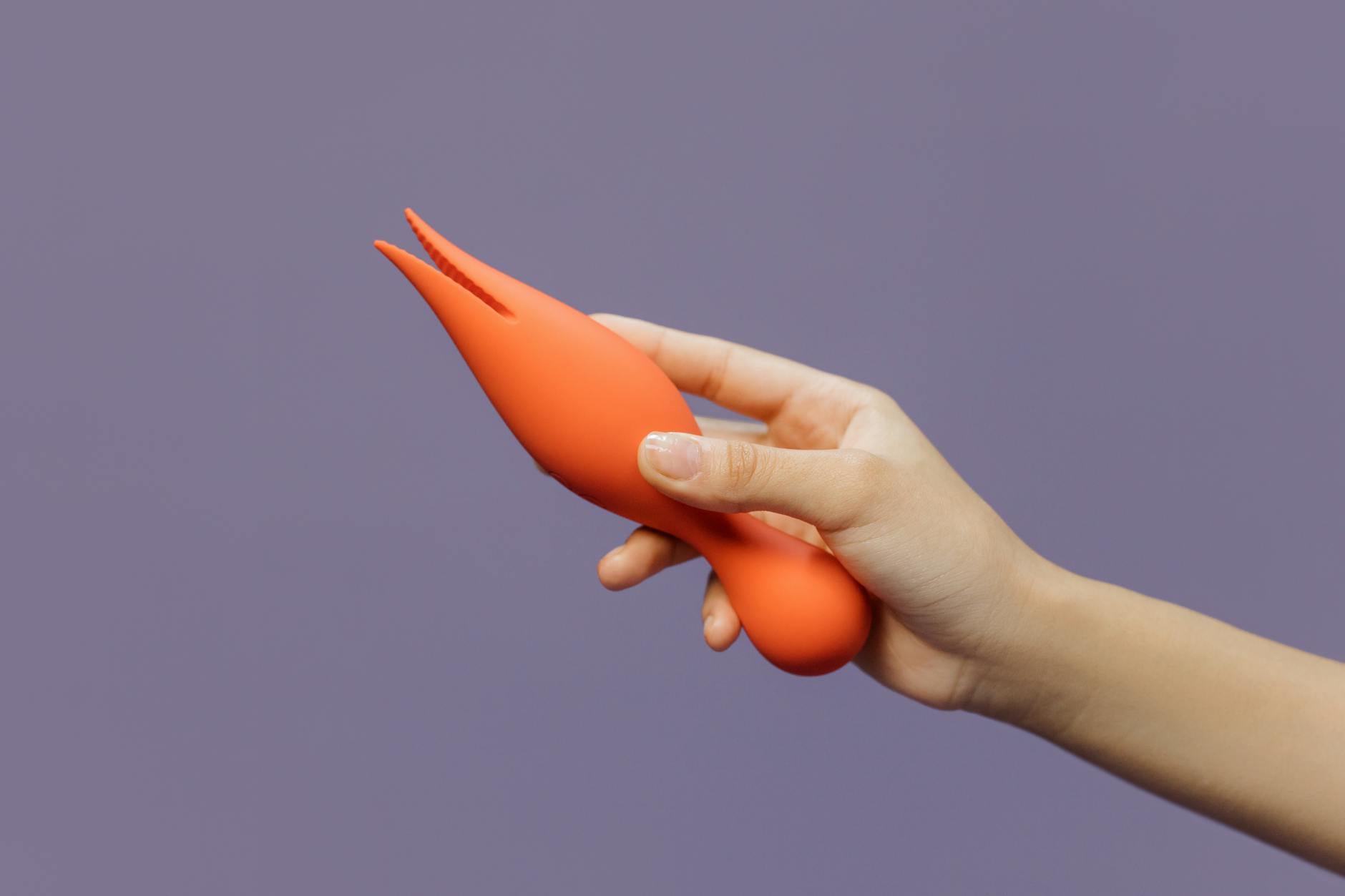
Here's what I see in my practice: the couples who break through aren't the ones who suddenly get better at having feelings talks. They're the ones who change the medium. They stop trying to solve it with words alone and introduce something physical. Something to touch, to experience, to react to together. A lemon clitoral vibrator isn't just a toy in this context. It's a translator.
Why lemon vibrators work as conversation starters
There's something about introducing a new element into a stuck dynamic that forces a reset. Not because the toy itself is magic, but because it requires active choice and participation from both people. You can't have the same old argument while holding a lemon vibrator. You have to decide together. You have to be present.
Lemon vibrators specifically offer what's called "low social friction." They're not intimidating like some toys. The design is approachable. If your partner has never used a clitoral vibrator before, the lemon sucker technology feels intuitive. The first-time experience isn't overwhelming. That matters because you're already navigating vulnerability. You don't need the toy to add more anxiety.
The second reason: these devices shift the focus from performance to sensation. So many couples get trapped in outcome-focused sex. "Did you finish? When will you finish? Why didn't that work?" A lemon vibrator is almost impossible to use while maintaining that frame. It's designed to feel good, not to check boxes. That alone changes the entire conversation from "Is this working?" to "What does this feel like?"
The three-step introduction conversation
Don't just buy one and leave it on the bedside table. That's not a conversation. That's a passive-aggressive text message.
Step 1: Outside the bedroom, with clothes on. Pick a calm moment. Say something like: "I've been thinking about us. I feel like we've gotten into a rut with sex talk, and I miss when things felt easier between us. I want to try something different. Would you be open to exploring that together?" You're not saying "I need a toy." You're saying "I miss us, and I want to fix it." That's the frame that matters.
Step 2: Show it, don't just tell about it. Have a lemon vibrator in hand (or show it on your phone). Say: "I read about this. It's called a lemon clitoral vibrator. It works differently than other toys. I'm curious what you think. Would you want to try it sometime?" The research matters here. It signals that this isn't impulsive. You've thought about this. You picked something specific on purpose.
Step 3: Make it low-stakes. Don't schedule it or turn it into a production. Say: "We could try it whenever. No pressure. No performance. Just to feel something different together." This removes the weight of expectation. You're not saying "This will fix us." You're saying "This might be fun to explore."
What actually happens in the first session
Let me be honest: it might feel awkward. Introduce a new prop into an intimate space and awkwardness is part of the deal. That's not bad. Awkwardness means you're trying something outside your script.
Here's how I guide couples through this. One partner holds the lemon vibrator. The other receives. Start clothed. Yes, fully clothed. Turn it on at the lowest setting and let your partner feel it on their arm, their neck, their hand. No genitals yet. This is just sensory data. "Oh, it does this thing," "That feels different than I expected," "I like that pattern better."
Then move to undressed but not aroused. You're still gathering information. Where does it feel good? What patterns matter? What makes you laugh? What makes you pause? This isn't foreplay yet. It's exploration.
The conversation here is the real work. You're saying things like: "That feels incredible," "Can we try the next setting?" "What if we tried this on the other side?" You're talking about sensation, not performance. You're noticing each other's reactions. You're present.
The shift that happens after
I've seen this play out with dozens of couples. Something changes after that first session. Not the sex necessarily, though sometimes that too. What changes is the permission structure. You've done something you don't do. You've tried something intentionally. You've brought the conversation into the physical world.
Once that door is open, other conversations become easier. Maybe you talk about what felt good. Maybe you start to notice patterns: "You seem more relaxed when we take our time," "I realized I get disconnected when I'm worried about finishing." These aren't new insights. They're things you probably both knew. But you're saying them now. And the other person isn't hearing "You're broken" or "This is your fault." They're hearing it as curiosity.
Here's the thing that matters most: a lemon vibrator doesn't change your partner. It changes the context. It moves the conversation from "Why isn't this working?" to "What does this do?" That shift is everything.
Common fears and how to address them
The fear most people bring to this conversation is: "Will my partner think I'm not satisfied?" or "Will they think they're replaceable?" These are real concerns, and they deserve real answers.
Before you introduce the toy, know your own answer to this question: Why do you want to try this? If your answer is "I want to feel something new together," that's strong. If your answer is "Things aren't working and I need to fix it without talking about it," that's not going to work. Your partner will sense it.
The reason a lemon clitoral vibrator helps is because it's not about replacing anything. It's about expanding. It's "I want to feel more with you" not "You're not enough." Make sure you mean that before you bring it up.
The second fear is that it will feel clinical or weird. Honestly? It might, the first time. That's okay. Weird is the price of trying something new. But couples who go in with humor, with permission for awkwardness, usually find that it loosens something. You're both nervous. You're both in it. That shared vulnerability is where intimacy actually lives.
When to get a professional involved
If the conversation itself is so stuck that you can't even ask this question without it turning into a fight, that's not a toy problem. That's a communication problem. A sex therapist or relationship coach can help you build the foundation first. Once you can talk without defensiveness, a lemon vibrator becomes a much more useful tool.
If your partner says no to trying it, that's information. It's not a rejection of you. It might mean they need more time. It might mean they need to understand the why better. Respect that boundary. Circle back later. Don't push. If after multiple conversations they're still not open, that's a different conversation entirely, and it might involve professional support.
If one or both of you have experienced sexual trauma, go slower with this. A professional can help you navigate how to introduce new sensation in a way that's safe and supported.
The real outcome
I want to be clear about what a lemon vibrator actually does. It doesn't fix a broken relationship. It doesn't solve communication issues that run deeper. But it does do this: it breaks the script. It gives you permission to try something different. It proves that change is possible.
Once you've proven change is possible with a toy, other changes become easier to imagine. Maybe you try a new position. Maybe you schedule sex differently. Maybe you actually read a book about pleasure together. The lemon vibrator isn't the solution. It's the permission slip.
The couples I work with who have the best outcomes aren't necessarily the ones with the most compatible desires or the highest libidos. They're the ones who are willing to get curious together. Who can try something new and laugh at themselves when it feels awkward. Who believe their partner wants to connect just as badly as they do.
A lemon clitoral vibrator is just a tool. But it's a tool that says: "I want this with you. Let's figure out what that looks like."
FAQ: Couples, Communication & Clitoral Vibrators
What if my partner gets offended that I want to use a toy during sex?
That reaction usually means they're hearing "You're not enough" even if that's not what you meant. Schedule a separate conversation. Not during sex. Not when anyone is vulnerable. Say: "I want to talk about something that's been on my mind. I'm not saying anything's wrong. I'm saying I want to feel something new with you, and I think trying something together might help us both." Frame it as an expansion, not a correction. If they're still resistant after that, ask what specifically worries them. It's rarely about the toy. It's usually about fear of being replaced or fear of inadequacy. You can address those directly.
Can we use a lemon vibrator if we've never talked about sex before?
Yes, actually. In some ways, it's easier. If you've never had the talk, the toy becomes a way to have it. You can say: "I want to try this because I want to feel closer to you, and I think exploring together might help us both feel less self-conscious." It bypasses some of the shame that older couples carry from years of not discussing it. Just make sure you're doing it for connection, not avoidance. The toy is a bridge, not a substitute for actual communication.
How do I bring this up if my partner has body image issues or anxiety?
Go even slower. Start by praising what you love about their body and their sexuality. Be specific. Then say: "I've been thinking about us, and I want to try something that might feel really good for you. Would you be open to exploring that?" Don't lead with the toy. Lead with care. Let them feel wanted first. When you do introduce it, emphasize that it's about sensation and pleasure, not performance. If they're still hesitant, skip it for now. Sometimes the best thing you can do is just show up with more attention, more touch, more presence. The toy can come later.
What if we try it and it doesn't feel good or things get awkward?
That's normal and it's fine. You can both laugh and move on. Or you can pause and say: "That felt weird. Let's try something different." The point isn't that the experience has to be perfect. The point is that you're trying. You're communicating. You're being vulnerable together. That's what actually builds intimacy. The physical sensation is secondary to that.
Should we tell friends about trying this?
No. Keep it between you. This is intimate territory. What you share publicly should be your decision as a couple. If one of you wants to talk about it and the other doesn't, you've got a boundary to respect. The conversation about the toy can stay private even if your relationship overall is something you discuss with friends.
How often should we use it once we start?
There's no schedule. Use it when you both want to. Some couples use it every time they have sex. Some use it once a month. Some use it for a few weeks and then move on to something else. The pressure to perform is one of the things that kills sexuality. Don't add more pressure by making this something you "should" do. Let it be something you want to do. When it stops feeling like an adventure and starts feeling like an obligation, take a break.
The hardest part of couples sexuality isn't the sex. It's the conversation. A lemon clitoral vibrator doesn't make the conversation easy. But it does make it different. And sometimes different is exactly what stuck couples need.