The thing nobody wants to admit
Your arousal timelines don't match. One of you is ready in minutes. The other needs a full warm-up. And instead of talking about it, you've both learned to feel a little bit of shame.
I see this in almost every couple I work with. The person who takes longer feels like they're holding things up. The person who's ready fast feels like they're being rejected when their partner isn't there yet. Then sex becomes this negotiation nobody enjoys, and intimacy flattens.
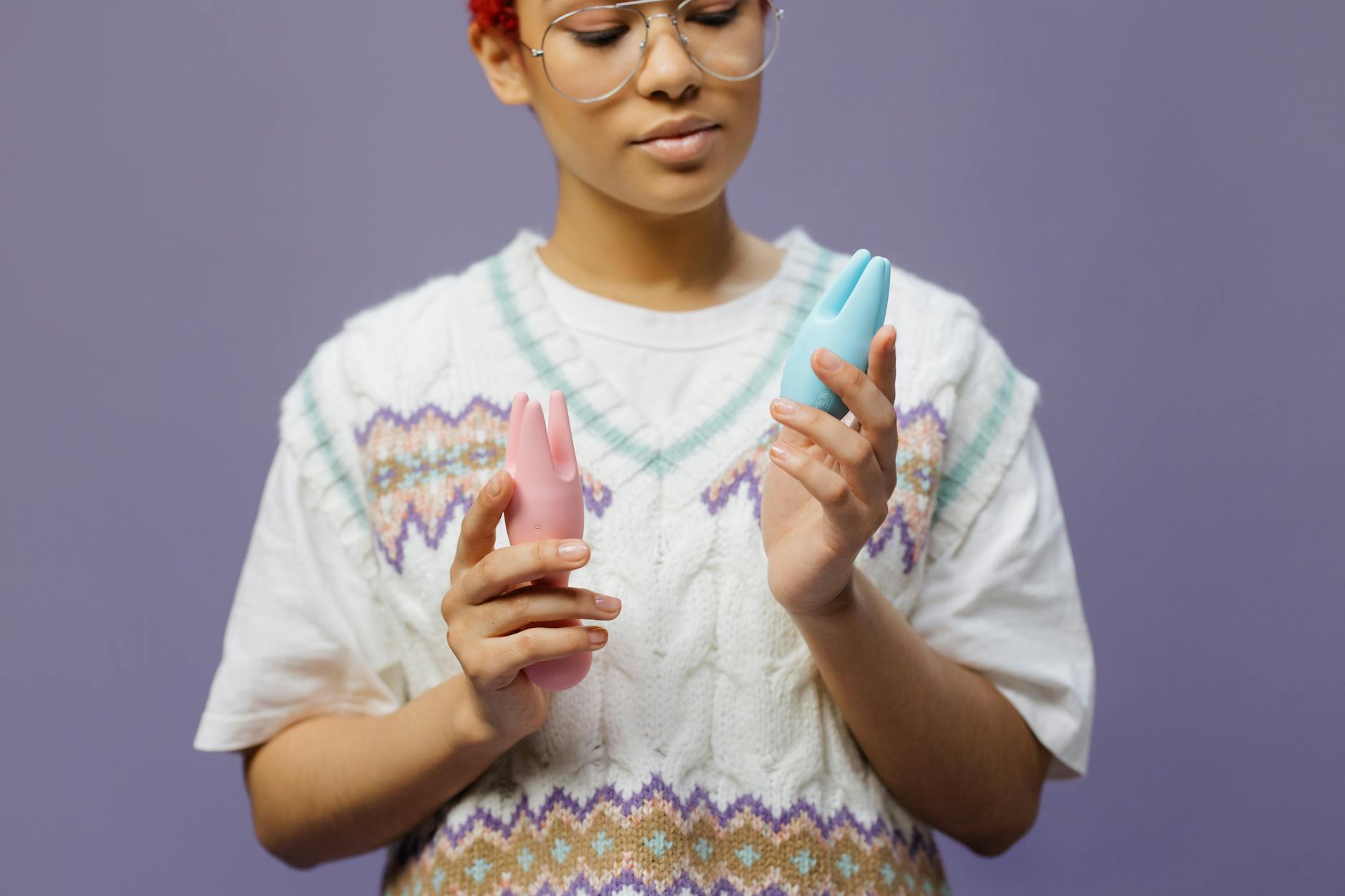
Here's what a lemon vibrator actually fixes: it gives you both something to do while you're syncing up.
Why arousal timelines naturally differ
Arousal isn't one thing. It's a process involving mental focus, physical sensation, hormone levels, stress load, and what you had for lunch. Research shows that people with vulvas take an average of 11-15 minutes to reach peak arousal, while people with penises often peak in 2-5 minutes. But those are averages. Individual variation is huge.
Add context on top of that. If you work different schedules, manage different stress, or have different baseline desire, those timelines drift even further apart. One partner might need decompression time after work. The other walks in the door ready to connect. Neither of those is wrong. They're just out of sync.
That mismatch becomes a real problem when you're trying to have partnered sex without tools. Someone finishes getting ready first. Then there's waiting. Then resentment. Then it feels easier to just skip the whole thing.
How a lemon clitoral vibrator actually solves the problem
A lemon vibrator doesn't speed up the slower partner or slow down the faster one. It gives you both something to focus on during the gap.
Let's say one of you is ready quickly and the other needs more time. Instead of starting penetration while your partner's still warming up, you start with the lemon. You're both getting clitoral stimulation. You're both building arousal together. The person who's ready fast gets to engage in a way that feels good right now. The person who needs more time isn't being pressured to rush.
The suction action of a lemon vibrator is particularly good for this because it doesn't require the kind of intense friction that can feel overwhelming before someone's fully aroused. If you're using it together, you can take turns. You can both use it in foreplay. You can use it as part of your sex. The point is you're both working toward the same moment, not one person waiting for the other.
The conversation you need to have first
Before you bring a lemon vibrator into your sex life as a couple tool, you need to actually talk about the arousal timing gap. Not during sex. Not in a frustrated moment. Just a regular conversation.
Start simple: "I've noticed our bodies warm up at different speeds. I don't think that's a problem. I think it just means we need to plan differently." That's it. You're naming the thing without blame.
Then ask: "What does your ideal warm-up feel like?" Maybe one partner needs touch. Maybe the other needs mental space first. Maybe one of you needs external stimulation and the other needs internal. You're gathering data, not negotiating.
Then the fun part: "What if we used a lemon vibrator so we're both getting what we need at the same time?" You're framing it as a tool that serves both of you. Because it does.
The choreography that actually works
There are a few practical ways to use a lemon vibrator when your arousal timelines don't match.
Option one: Tag team during foreplay. One partner uses the lemon while the other uses touch. Every few minutes, switch. This gives both of you clitoral stimulation and keeps you engaged with each other. The person who typically needs more time gets direct stimulation early. The person who's ready quickly still gets to participate in building your partner's arousal.
Option two: Use it before you start. Set aside 10-15 minutes for what I call "parity play." Both of you touch each other, and one of you uses the lemon on the person who needs longer to warm up. No pressure. No agenda. Just getting aligned before you move into whatever else you want to do.
Option three: Bring it into the main event. If you're going to have penetrative sex, one partner can use the lemon during intercourse while the other uses their hands or penis for penetration. This is especially helpful if one of you struggles to orgasm from penetration alone. The lemon gives you both a way to feel good at the same time.
The key in all three approaches: you're both doing something, both building arousal, both getting pleasure. Nobody's watching from the sidelines.
The emotional piece that changes everything
Here's the part that therapists notice but sex toy companies don't talk about. When you solve the arousal timing mismatch practically, something shifts emotionally.
The person who used to feel like they were slowing things down starts to feel wanted. They're not being rushed or pressured. Their partner is actively engaged in their pleasure. The person who used to get bored waiting now has something to do. They're not sitting there feeling rejected. They're building anticipation.
That shift is huge for long-term couples, especially if this timing gap has been quietly eroding your sex life for years. You're not just making sex feel better physically. You're making it feel safer. You're both choosing each other at the same time.
Why this matters for specific partner combinations
If you're a couple where one partner has always reached orgasm quickly and the other hasn't, a lemon vibrator changes the narrative. Instead of "I take too long," it becomes "We have different timelines, so we use this tool." That reframe is everything.
If you're in a long-term relationship where desire or arousal has shifted over time due to hormones, medication, or life stress, a lemon vibrator also levels the field. You can both get direct clitoral stimulation without anyone having to be "on" in the traditional way. That matters if penetration used to feel easy and now it doesn't, or if one of you has lost sensation and needs more direct input.
If you have mismatched libidos where one partner wants sex more than the other, a lemon vibrator can actually help the lower-desire partner feel less pressure. You're not asking them to get ready fast. You're giving them actual stimulation to build their own arousal. That's different.
The logistics: lube, comfort, and communication during
Use a water-based lubricant. It makes the lemon feel better for both of you. If one of you has a lemon clitoral vibrator and the other's using hands or a penis, lube helps everything glide. If you're both using lemon vibrators on each other, lube reduces friction and feels smoother.
Take your time. Arousal isn't a race, even with a tool. If one of you reaches pleasure first, stay engaged. Keep using the lemon. Keep touching. The other person isn't behind. They're just on their own timeline.
Talk during. "Does this feel good?" "Do you want more sensation?" "Should we switch?" Those aren't mood-killers. They're the actual map of how to sync up. Couples who communicate during sex have better sex. Period.
What to do if one of you still finishes first
You will still finish at different times. That's biology. A lemon vibrator doesn't erase that. What it does is make sure the person who finishes first has concrete ways to stay engaged.
After you orgasm, you can keep using the lemon on your partner. You can use your hands. You can be present. The point is you don't check out. You don't make your partner feel like they're on their own for the home stretch.
If your partner finishes and you're still working toward pleasure, you get to ask for what you need without shame. "Keep using the lemon." "Can you touch me here?" "I need a few more minutes." You're not asking for a favor. You're participating in shared pleasure.
A quick note on comparison
You might see partners online who seem to arrive at pleasure at exactly the same moment every time. That's not real. That's either practice with a very specific partner over years, or it's editing. Real couples have arousal timelines that are different, and that's completely normal.
The goal isn't to make your timelines identical. The goal is to stop treating the gap like a problem and start treating it like information. A lemon clitoral vibrator is just the tool that makes that easier.
FAQ
Can we use a lemon vibrator if we haven't talked about mismatched arousal before?
Yes, but the conversation matters more than the tool. You can introduce it as "I picked this up because I want us to have more fun together" and see what happens. But if the arousal timing gap has been quietly causing resentment, the vibrator alone won't fix it. You still need to name what's happening.
What if one of us is uncomfortable with vibrators in general?
Then a lemon vibrator isn't the answer. But the underlying timing mismatch still is. You might solve it with more foreplay time, with explicit communication about pacing, or by shifting when you have sex. The tool should fit your relationship, not the other way around.
Is it okay to use a lemon vibrator if we're also having penetrative sex?
Completely. Many couples find that using a lemon vibrator during penetration helps the partner with a vulva orgasm and helps both people feel satisfied at the same time. It's especially helpful if one person struggles to come from penetration alone.
How do we keep a lemon vibrator clean if we're both using it on each other?
Wash it with warm water and mild soap between uses, or use toy cleaner. Let it dry fully. If you're concerned about hygiene, you can also each have your own lemon vibrator, which removes the logistics question entirely.
What if we use it and one of us still feels like the other person is taking too long?
Then you've named a bigger issue. That feeling often isn't actually about timing. It's about feeling wanted, or about pressure to perform. Those need a different conversation, possibly with a couples therapist. A tool won't fix relationship resentment. But it can help if the resentment is new and the mismatch is the actual problem.
Can a lemon vibrator help if we've been having less sex because of the timing issue?
Often yes. When couples solve the logistical problem of different arousal speeds, sex becomes less of a negotiation and more like something you both actually want. A lemon vibrator is that practical bridge. But if the gap in desire is bigger than just timing, that's another conversation.
The real insight here: couples with different arousal timelines don't have a sex problem. They have a communication and logistics problem. A lemon vibrator is just the tool that makes the logistics workable. The communication is still on you.