
The part nobody talks about
Grief is a full-body shutdown. For weeks or months or years, pleasure doesn't exist in the same way it did before. Sex feels impossible. Touching feels wrong. Your body feels like it belongs to someone else's story.
Then one day, something shifts. A moment of connection with your partner. A memory that doesn't hurt as much. A random flash of desire that catches you completely off guard. And suddenly you're sitting with a feeling you didn't expect: guilt. Because wanting pleasure again feels like a betrayal of the person you lost, or the version of yourself you were before, or the agreement you made with grief.
Here's what I need you to know as a relationship coach: that feeling is real, and it's also not the full truth.
Why pleasure disappears during grief (and why it comes back)
Grief activates your nervous system's shutdown response. When you're processing loss, your brain prioritizes survival and emotional processing. Pleasure, desire, even arousal capacity all get downregulated. This isn't weakness or depression necessarily. It's your body doing exactly what it's supposed to do during intense emotional processing.
But here's the complicated part: pleasure returning is also part of healing.
When your system begins to stabilize, when you've moved through acute grief into integration, your body naturally wants to reconnect with sensation, comfort, and aliveness. This doesn't mean you've forgotten the person you lost or that the grief is "over." Grief doesn't end. It metabolizes. And as it does, pleasure can coexist with it.
Many people experience this as a sharp emotional conflict. Let me name what that usually sounds like: "If I enjoy sex again, it means I'm moving on too fast." Or: "My partner wouldn't want me to be happy." Or: "Feeling this alive seems disrespectful to their memory."
None of those things are true. But they feel true, and that matters.
The emotional work comes first
Before you pick up a lemon vibrator or any other tool, the most important step is giving yourself permission.
This isn't a single conversation with yourself. It's something you might need to revisit multiple times. The permission is this: my pleasure returning is not a betrayal. It's a sign that I'm capable of holding both grief and aliveness at the same time.
If you're in a partnership, this is also a conversation to have with your partner. Not in a clinical way. More like: "I'm noticing desire coming back, and it feels complicated. Here's what I'm working through." A good partner will understand that your healing includes sensual reconnection. They'll also understand that sometimes pleasure is about you alone, in your own body, rebuilding trust with yourself.
If you're solo, write this down somewhere: Pleasure is how I tell my nervous system that it's safe to be alive again. There's nothing wrong with that.
How clitoral vibrators help rewire the nervous system
When grief has shut down your pleasure response, your body often needs a gentler entry point than what worked before.
This is where tools like the Lem vibrator become powerful. Not because they're a magic solution, but because they give you control in a way that rebuilds trust with your own body.
Here's what happens neurologically: when you use a clitoral suction vibrator, you're stimulating nerve endings that, over time, reactivate your arousal capacity. But you're doing it on your timeline, at your pace, with an intensity you choose. For someone rebuilding after grief, that agency matters more than anything else.
Start by using it alone, in a space where you feel completely safe. Not with an expectation of orgasm. Not with pressure to feel a certain way. Just you and the sensations. The Lem vibrator's gentle suction pattern is particularly helpful here because it mimics a natural rhythm rather than aggressive vibration. Your system doesn't have to work as hard to process the input.
A gentle protocol for starting again
Setting: quiet space, comfortable temperature, clothes off or loose.
Step one. Spend five to ten minutes just breathing and noticing your body. Not trying to feel aroused. Just present.
Step two. Use the Lem vibrator on the lowest setting for two to three minutes on your vulva, avoiding direct clitoral contact. Let your body adjust to sensation without pressure.
Step three. If it feels good, gradually increase intensity or move slightly closer to your clitoris. Stop immediately if you feel overwhelmed or numb.
Step four. Don't chase orgasm. Let your body show you what it wants. Sometimes that's a gentle warmth. Sometimes nothing happens and that's completely fine.
The first few times, expect to feel emotional. Pleasure returning after grief often comes with tears, not from sadness, but from relief. From your nervous system recognizing: I'm safe enough to feel good again.
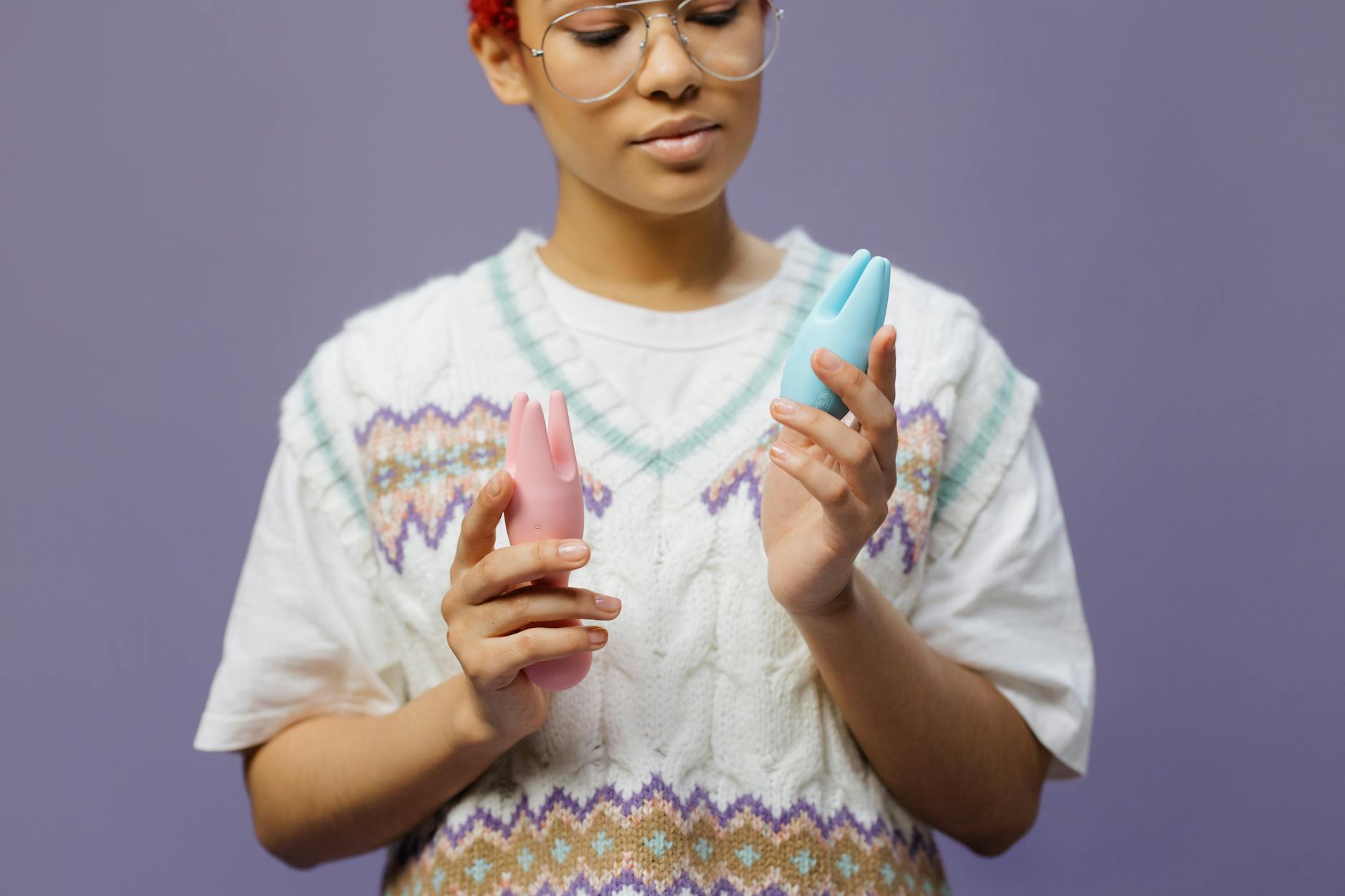
Photo by cottonbro studio on Pexels
Integrating pleasure with your partner
If you're partnered, moving from solo pleasure back into shared intimacy takes intentional communication.
One approach: tell your partner specifically what you need. Not "I need you to be patient" but "I'm rebuilding trust with my body right now. Some nights I want to use my Lem vibrator alone while you're reading nearby, so I can reconnect at my own pace. Other nights I want you close but not touching. And sometimes I'll want more active intimacy. Can we check in each time?"
This removes ambiguity and takes away the pressure your partner might feel to "fix" your pleasure or to know instinctively what you need.
You might also find that pleasure with your partner looks different now. Maybe you need longer foreplay. Maybe you need to talk more during sex. Maybe you need toys involved in a way they weren't before. These aren't signs something is broken. They're evidence that you're rebuilding something more honest.
When the guilt shows up (and it will)
At some point, usually unexpectedly, you'll feel shame about experiencing pleasure. That's not a sign something is wrong. That's grief doing what grief does: reminding you that loss is real.
When it happens, here's what helps: pause, acknowledge the feeling without judgment, and remind yourself that pleasure and grief can coexist. You can miss someone deeply and also enjoy your body. You can mourn a relationship you had and also explore new dimensions of sexuality. You can honor what was lost while building what comes next.
If the guilt becomes persistent or pleasure still feels impossible after several months of gentle exploration, that's worth discussing with a therapist. Sometimes grief gets stuck in the body, and professional support helps it move.
Reconnection is its own kind of healing
When I work with couples navigating grief together, I often see pleasure return as a quiet milestone. Not something to announce or celebrate loudly, but something to notice and welcome.
Using a lemon clitoral vibrator as part of this process isn't about getting back to normal. It's about gently, consensually moving your nervous system from "survival" back into "living." From shutdown to sensation. From absence into presence.
Your body knows how to do this. You don't need to rush it or force it or feel guilty about it. You just need to show up with patience, permission, and the right tools—whether that's therapy, a partner's quiet support, or a vibrator that lets you explore pleasure on your own timeline.
People also ask
Is it normal to feel guilty about pleasure after loss?
Absolutely. Grief activates a loyalty response in many people. Your nervous system associates pleasure with "things are fine," which feels like it dishonors the person or situation you're mourning. Cognitively, you know pleasure returning is healthy and necessary. Emotionally, it can still feel like a betrayal. Both things are true simultaneously. The guilt usually softens as you integrate grief more fully and allow yourself to hold both sadness and aliveness in your body.
How long does it usually take for desire to come back after grief?
There's no standard timeline. For some people, it's weeks. For others, months or years. It depends on the type of loss, your attachment style, your support system, and your baseline neurology. What matters isn't speed. It's noticing when it does return and responding with curiosity rather than judgment. If you notice absolutely no shift in desire after a year and you want things to feel different, that's worth exploring with a therapist or medical professional.
Can I use a lemon vibrator during partnered sex if I'm also dealing with grief?
Yes, and many couples find it actually deepens their reconnection. The Lem vibrator can take the pressure off your partner (since they don't have to "perform" or worry about your pleasure) while keeping you in control of your own sensation. Some people find this releases the anxiety around sex after grief. Just talk about it first. Surprises rarely help.
What if I feel nothing when I use the vibrator? Is that a problem?
Not necessarily. Numbness or flatness is common during active grief. Your nervous system might not be ready to process sensation yet, and that's okay. Try again in a few weeks. If numbness persists beyond the acute grieving phase, it might be worth checking in with a professional about depression or prolonged grief disorder, which can involve nervous system support or therapy.
Is it disrespectful to a deceased partner's memory to use sex toys?
No. Your partner, if they cared about you, would want you to live fully in your body and heal. Pleasure is part of that. You can honor someone's memory while also nourishing yourself. These aren't mutually exclusive. In fact, many people experience using a lemon vibrator as a kind of self-care ritual that actually deepens their ability to hold the person with love and respect.
How do I explain to my partner why I suddenly want to explore pleasure again?
Try something like: "I'm noticing my desire returning, and it feels complicated because of everything we've been through. I want us to rebuild this part of our connection, but I need to do it slowly and with a lot of communication. I might want to explore things differently than before, including using toys. Can we talk about what that looks like for both of us?" This names both the emotion and the practical need.
If you're struggling with reconnection after loss—whether it's relationship grief, death, or another kind of major loss—reaching out to a therapist trained in grief work can help. So can reconnecting with your own body, one gentle sensation at a time. You deserve to feel alive again. Pleasure returning isn't a betrayal. It's permission you're giving yourself to heal.
Reach out if you'd like to talk through what reconnection looks like for your specific situation.