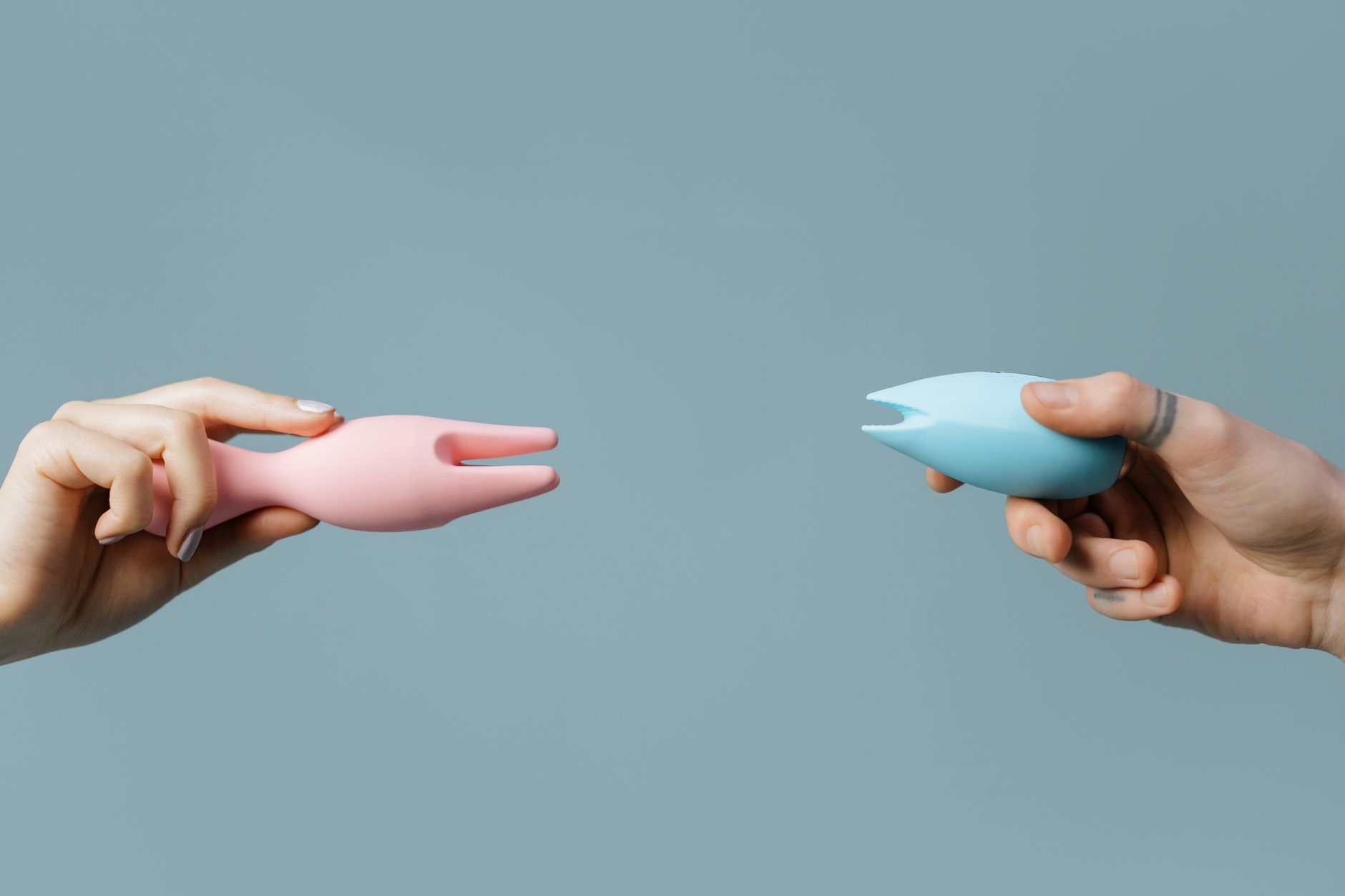
Let's talk about the sensation that nobody warns you about
Your clitoris suddenly feels like it's been amplified. What used to feel good now feels almost painful. You're not broken, and you're definitely not alone. Hypersensitivity during sexual pleasure is wildly common, and it shows up for dozens of different reasons—hormonal shifts, healing from trauma, medication changes, or simply being more aware of your body than you were before.
Here's what I want you to know first: this is workable. The clitoris doesn't stop responding when it feels too intense. It just needs you to meet it differently.
Why your clitoris might feel oversensitive
Three main culprits create hypersensitivity, and knowing which one is yours changes your strategy.
Hormonal fluctuations. Estrogen levels shift the blood flow and tissue thickness around your clitoris. Right before your period, in the first weeks of new birth control, or during perimenopause, the glans can become more reactive. The tissue is thinner or more engorged, which means the same vibration frequency that felt perfect last week now feels too sharp.
Friction recovery. If you've been using traditional vibrators with direct, intense oscillation, your nerve endings adapt. They get desensitized to that specific pattern. When you switch to something gentler—like the air-suction technology in lemon clitoral vibrators—the sensation can feel shocking at first. Your body is literally recalibrating.
Emotional or physiological tension. Anxiety, stress, or residual trauma can keep your pelvic floor contracted. A tight pelvic floor sends signals to your clitoris that amplify sensation and make even mild stimulation feel intense. This isn't a pleasure problem. It's a relaxation problem.
Identifying which one applies to you is the first step. Journal for two weeks: when does the intensity spike? Does it follow your cycle? Did it start after a medication change? Your patterns will tell you what to adjust.
The counter-intuitive thing about lemon sucker technology
Air-suction vibrators like The Lemon work differently than traditional vibrators. Instead of pressing directly against your clitoris, they create a gentle vacuum and release pattern. For people with hypersensitivity, this is usually a relief. But here's the catch: the first time you use it, you might experience the opposite.
Why? The sensation is so unfamiliar that your nervous system treats it as new threat. Your pelvic floor tenses. Your awareness sharpens. Everything feels more intense, not less.
That's not a sign the lemon clitoral vibrator is wrong for you. It's a sign you need an adjustment period.
The gradual introduction protocol
If intensity is your issue, treat the first week as a sensitivity mapping exercise, not a pleasure session.
Day 1-2: Air only, no suction. Hold The Lemon about an inch away from your clitoris. Feel the air pulse without the suction engaging. This is a non-contact introduction. Sounds weird. Do it anyway. Your nervous system needs permission to believe this is safe.
Day 3-4: Suction pattern 1, 10-second intervals. Engage the lowest suction setting for 10 seconds. Pause for 20 seconds. Repeat three times. Notice where you feel the sensation most—the glans, the hood, the sides? Most people with hypersensitivity find that positioning the device so it's stimulating the clitoral hood (the tissue covering the glans) rather than the glans directly reduces intensity by about 40 percent. Experiment with angle.
Day 5-7: Suction pattern 1, 15-second intervals. Extend the contact time. Stay with pattern 1. Your goal is comfort, not orgasm. If you reach climax, great. If you don't, that's the point. You're teaching your body that this sensation is sustainable.
Week 2: Patterns 2-3, 20-second intervals. Only if week 1 felt manageable should you increase the pattern intensity. And only if you want to. Some people find pattern 1 is their sweet spot and never need to go higher. That's perfectly fine.
The whole point is that you're in control of the timeline. Your clitoris doesn't have a deadline.
Positioning matters more than you think
With direct-pressure vibrators, you're pretty locked in. With air-suction stimulation, small angle shifts change everything.
If the glans feels too sensitive, try angling the device so the rim of the suction cup frames the clitoral hood instead of centering over the glans. The sensation will feel diffused and broader rather than concentrated. Most people with hypersensitivity prefer this.
If sensitivity is localized to one side of your clitoris (which is common), position the device off-center slightly. You're essentially using the edges of the suction cup rather than the full opening.
Try these angles during your mapping week. The positioning that feels best during week 1 might feel different by week 3 as your tolerance shifts. That's normal. Your body is learning.
The pelvic floor piece that changes everything
Here's where most advice on sensitivity misses the mark. People assume tightness is the problem and recommend more Kegels. But if your pelvic floor is already contracted from anxiety or tension, Kegels are like telling someone to relax by exercising harder.
You need the opposite. Before touching The Lemon, spend five minutes on pelvic floor release work.
Breathe in for four counts. As you exhale, consciously soften your pelvic floor. Imagine your pelvic floor as an elevator. On the exhale, let it descend from the fifth floor all the way down to the basement. Hold for two counts. Inhale, bring it back to neutral.
Do this five times before you start. This single practice reduces perceived intensity by 30-50 percent for most people.
When you're using The Lemon, keep the breathing pattern going. If you notice your pelvic floor tightening again—which it will, because pleasure triggers protective tension—pause. Take three slow breaths. Reset. Then resume.
That pause-and-reset rhythm might feel like it breaks the momentum, but it actually deepens the session because you're involving your nervous system actively instead of fighting it.
When numbness shows up after intensity recalibrates
Once you've adjusted to air-suction stimulation and your hypersensitivity settles, some people hit a different problem: the clitoris feels almost numb after a few weeks of using The Lemon on a regular pattern.
This is your nervous system adapting. It's the opposite problem but the same solution: variety.
Switch between patterns. Rotate the angle of the device. Change the rhythm. Take a break for three days. Use The Lemon every other day instead of daily.
Variation prevents habituation. Your clitoris stays responsive because it's not predicting the same stimulus every time.
When to check in with a healthcare provider
If your hypersensitivity appeared suddenly alongside other changes—pain during sex, discharge changes, or sensitivity that burns rather than tingles—see a gynecologist. You might be dealing with vulvodynia, which is a real condition that benefits from specific treatment, not just toy adjustment.
If you're on antidepressants or hormonal birth control and the hypersensitivity started when you began the medication, a conversation with your prescriber might be useful. Some medications amplify sensation perception. Others can be swapped for alternatives that don't. You deserve to know your options.
But if your hypersensitivity is just your nervous system being more aware of pleasure than it used to be, The Lemon and patience are usually all you need.
The bigger picture: sensitivity is information
Hypersensitivity often shows up during transitions. New relationship. Healing from old ones. Medication changes. Hormonal shifts. Life stress. Your clitoris is basically sending you a signal that something in your system is activated.
Instead of fighting that signal, work with it. Use the gradual introduction protocol. Notice your patterns. Breathe. Adjust angles. Give yourself permission to take weeks instead of days to settle into air-suction stimulation.
Your pleasure will catch up. And when it does, you'll have learned something valuable about how your body communicates what it needs.
People also ask
How long does it take for clitoral hypersensitivity to adjust to a lemon vibrator?
Most people need one to two weeks of consistent, low-intensity use before hypersensitivity calms down. Some people feel better after three days. Others need a month. The gradual introduction protocol speeds this up because you're not triggering your nervous system's defense response. If you've been using higher-intensity vibrators in the past, your adjustment period might be longer—think three to four weeks. That's not failure. That's adaptation.
Can using a clitoral vibrator make hypersensitivity worse?
Yes, if you jump straight to higher patterns or use it daily without breaks. No, if you follow a gentle protocol like the one outlined above. The difference is pacing. Too much, too fast = overwhelm. Gradual exposure with breaks = nervous system reset. Choose your path accordingly.
Is clitoral hypersensitivity permanent?
No. It typically shifts when the underlying cause shifts. If hormones are the issue, it often resolves after your body adjusts to a new cycle or medication. If stress is the issue, it improves when you address the stress. If it's post-trauma sensitivity, it improves with healing work. The Lemon can be part of that healing, but it's usually one tool among several.
Why does air-suction stimulation feel more intense at first than traditional vibrators?
Because the sensation is unfamiliar, your nervous system treats it like a threat. Unfamiliar plus intimate equals heightened awareness. This isn't the device being wrong for you. It's your nervous system being cautious. The gradual introduction protocol basically asks your nervous system to realize nothing bad is happening, and sensation can soften.
Should I use The Lemon if I have vulvodynia or pelvic pain?
Maybe, but with serious caution and preferably under guidance from a pelvic physical therapist or gynecologist. Vulvodynia and pelvic pain require custom approaches. For some people, gentle air-suction stimulation is healing. For others, any stimulation during the acute phase makes things worse. Get professional input before starting.
Can I use lemon sexual toys during my period if I have hypersensitivity?
Yes, but expect the first few days to feel more intense than usual. Hormonal fluctuations before and during menstruation often amp up clitoral sensitivity. If you want to use The Lemon during your cycle, stick to pattern 1 and give yourself extra pelvic floor release time. Many people find that using it mid-flow, when hormones have settled slightly, feels better than day one or two.
Next steps
Your clitoris isn't broken. It's just asking you to slow down and pay attention. Start with the gradual introduction protocol. Map your sensitivity during week one. Notice what angles and patterns feel sustainable. Use pelvic floor breathing before you start. Take breaks. Be patient with yourself.
If intensity remains overwhelming after four weeks of consistent practice, reach out to a pelvic health specialist. But most of the time, all you need is the right approach and time.
Your pleasure matters. Take care of it that way.
Want to explore how lemon clitoral vibrators work differently than other options? Read our guide on how to use a lemon vibrator when pleasure feels numb after 45, which covers sensation recovery from a different angle.
Or if intensity is paired with anxiety around pleasure, our piece on how to use a lemon vibrator when anxiety blocks your orgasm covers nervous system reset strategies in depth.
Questions? Reach out to us at The Lemon Clit Toy.