
Let's name what's actually happening
Relationship burnout is not about your partner. It's not about your libido dying or your body failing you. It's about your nervous system being stuck in a state of vigilance that leaves zero bandwidth for pleasure.
You're managing work, managing the household, managing emotional labor (yours and theirs), and managing the relationship itself. By the time you and your partner are alone together, your body has already spent twelve hours in protective mode. Arousal requires the opposite. It requires safety, softness, and presence. Burnout offers none of these.
The tricky part is that burnout-driven desire loss feels like a libido problem. It's not. It's a nervous system problem masquerading as one.
Why your desire goes missing under chronic stress
When you're running on fumes, your body deprioritizes pleasure because survival systems have taken over. Your sympathetic nervous system (the gas pedal) stays on high alert. Your parasympathetic nervous system (the brake pedal that allows rest and arousal) barely gets a turn.
This happens at a biochemical level. Cortisol rises, oxytocin drops. You become touch-averse even with someone you love. Sex feels like another task instead of a refuge. Your partner touches you and you flinch, not because you don't care about them, but because your system has no more capacity to receive.
The kicker: traditional partnered sex often demands more emotional labor in this state. You're worried about your performance, your partner's satisfaction, whether you're being a good partner. You're managing the intimacy instead of experiencing it. Desire has already left the building.
What a lemon vibrator does differently
A lemon clitoral vibrator like the Lem operates in a completely different register than partnered sex in burnout mode. Here's why it works as a reset button.
First, it's entirely selfish in the best possible way. There's nobody to please, no performance to manage, no nervous system to coordinate with. You're only responsible for your own body and your own pleasure. Your brain can finally stop managing the relationship dynamics and just be here.
Second, lemon sucker technology (air-suction stimulation) works with your nervous system rather than against it. The sensation is gentler than traditional vibrators, which means it doesn't demand that your body be already aroused to feel good. You can start where you are right now. Desensitized, exhausted, checked out. The Lem meets you there.
Third, clitoral vibrators in general short-circuit the burnout loop because they deliver direct sensation without requiring full-body presence. You don't need to coordinate anything or perform anything. Just sensation, no management.
How to use a lemon vibrator when you're running on empty
Start with permission, not pressure. Your job is not to achieve an orgasm. Your job is to reconnect with sensation when your body has been running on empty. Some sessions will lead to orgasm. Many won't. Both are fine.
Pick a time when you have actual privacy and zero time pressure. Burnout makes you time-conscious and alert to interruption. Set a do-not-disturb on your phone. Lock the door. Give yourself permission to take 20 minutes. If you can't protect 20 minutes, you're not ready yet. Step back and solve the time problem first.
Start at the lowest setting. Your nervous system is already in overdrive. A gentle, consistent sensation is what signals safety to your brain. Settings 1 or 2 on the Lem work beautifully here. Intensity can come later, when you've remembered what pleasure feels like.
Use water-based lubricant. Burnout often coincides with less natural lubrication because your parasympathetic nervous system is offline. Water-based lube removes friction and signals care to yourself. It says "I'm treating my body gently."
Breathe consciously. Your burnout nervous system is probably stuck in shallow chest breathing. As you use the lemon vibrator, deliberately shift to deeper belly breathing. This signals your nervous system that you're safe. Exhale longer than you inhale. This is not woo. It's vagal tone, and it's measurable.
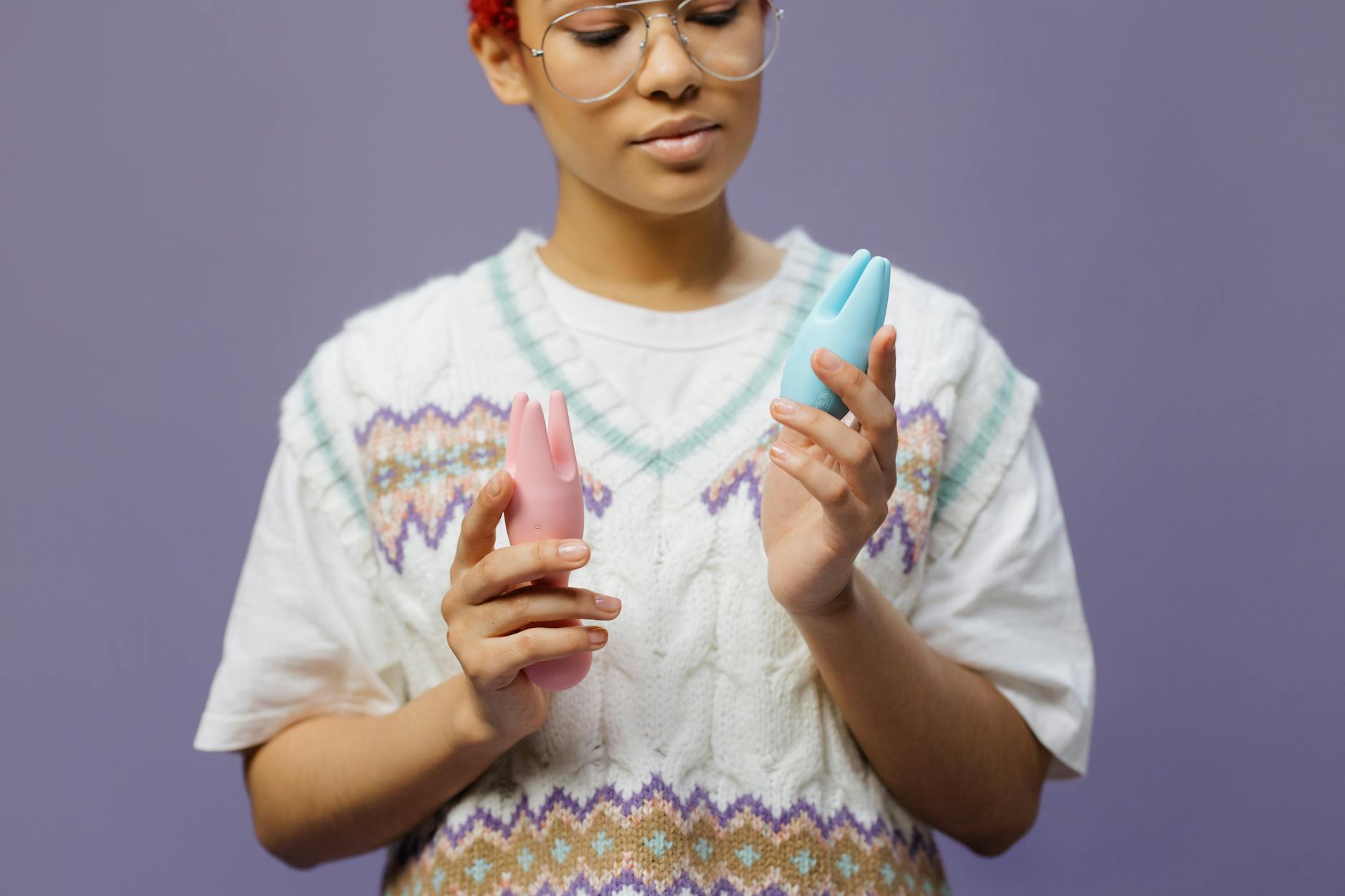
Photo by cottonbro studio on Pexels
The real work: rebuilding connection with yourself
Using a lemon clitoral vibrator solo during burnout isn't about achieving pleasure. It's about sending a message to your own nervous system: you matter enough to protect time for this. You matter enough to feel good. Your pleasure matters even when nothing productive comes from it.
This is genuinely the hardest part for people in burnout. Solo pleasure during burnout can feel selfish or frivolous when there's so much else to manage. But that mindset is exactly what keeps you stuck. Your burnout is a signal that your nervous system needs regulation. A lemon vibrator is a tool for that regulation.
Many of my clients find that the first three or four sessions feel mechanical. Your body is learning to trust that this time is actually safe and actually just for pleasure. It takes a few sessions for your parasympathetic nervous system to downshift. This is normal. Keep showing up, no pressure.
When to introduce your partner back in
Once you've reconnected with solo pleasure (usually after two to three weeks of regular sessions), you can slowly invite your partner into the experience. This doesn't mean partnered sex. It means letting them be in the room while you use your lemon vibrator, or asking them to touch you while you use it on yourself.
This reframes intimacy. Your partner witnesses your pleasure returning. They're not responsible for generating it. They're just present for it. This distinction changes everything for a burned-out couple because it removes the pressure from partnered sex while rebuilding the sense that pleasure is possible between you.
The conversation you actually need to have
If you're in a relationship, the burnout conversation has to happen separately from the pleasure conversation. Your partner needs to understand that your desire loss is not about them or your relationship. It's about your nervous system being stuck in protection mode.
This usually means addressing the actual sources of burnout. Are you carrying too much household management? Is the emotional labor split evenly? Are you both checked out from work and parenting? Until those things shift, your desire will stay offline no matter what tool you use.
A lemon vibrator can reset your nervous system and help you remember pleasure. It cannot fix a relationship where the burnout is caused by structural inequality. Use the tool and also do the work.
Why this matters beyond the bedroom
Restarting desire after burnout is not just about sex. It's about reclaiming your right to feel good. It's about telling yourself that your pleasure is not a luxury you earn by being productive enough. It's a part of being human that matters.
When you rebuild your capacity for pleasure, your overall nervous system regulation improves. You sleep better. You feel less irritable. You're more patient with your partner and your kids. You have more to give because you're not running on fumes.
That's why a tool as simple as a lemon vibrator can be transformative during burnout. It's not magic. It's just a clear signal to your nervous system that you matter enough to feel good, even when everything else is demanding your attention.
People also ask
Can I use a lemon vibrator if I feel completely numb during burnout?
Absolutely. That numbness is your nervous system's way of protecting you when it's overwhelmed. Numbness doesn't mean you've lost your capacity for sensation. It means your system has temporarily shut down sensation to cope. A gentle lemon clitoral vibrator often works better than a traditional vibrator in this state because the suction sensation can bypass that numbness and wake up nerve endings even when you're disconnected. Start with very short sessions (five minutes) and notice what sensations appear, even if they're faint.
How long before burnout-related desire loss comes back?
It depends on what's causing the burnout. If the burnout is situational (a stressful work season, a big family change), desire can return within a few weeks once the stressor eases and you're regularly using a tool like a lemon vibrator to reset your nervous system. If the burnout is structural (chronic imbalance in your relationship, unsustainable work demands), desire won't return until the underlying situation changes. The lemon vibrator helps you remember pleasure exists, but it doesn't fix the burnout itself. Both matter.
Is it okay to use a lemon vibrator alone while in a relationship if we're not having sex?
Yes, completely. Solo pleasure isn't a replacement for partnered intimacy. It's a way of maintaining your own nervous system regulation and reminding yourself what pleasure feels like when your partnership is temporarily offline. Many couples find that taking time for solo pleasure during burnout actually helps them reconnect because it removes the pressure and shame around desire loss. When you come back together, you're not trying to force desire into existence. You're both working from a place of remembering that pleasure is possible.
What's the difference between using a lemon vibrator during burnout versus using one when your desire is healthy?
During burnout, you're using it as a nervous system reset. You're starting from a place of disconnection and rebuilding the signal between your body and your pleasure. When desire is healthy, you're using it for intensity, exploration, or novelty. The lemon vibrator works beautifully in both states, but the intention is different. In burnout, you're asking "Can I feel anything?" In a healthy desire state, you're asking "What can I feel?"
Should I tell my partner I'm using a lemon vibrator to manage burnout?
Depends on your relationship agreement about solo pleasure and how your partner might interpret it. Some partners feel relieved knowing you're actively trying to rebuild desire. Others might feel hurt or left out. If you're using it as part of rebuilding the relationship, transparency usually helps because it reframes the lemon vibrator as a tool for reconnection, not replacement. Have the conversation before you start, not after.
Can burnout come back even after desire is restored?
Yes. If the underlying stressors return and you're not maintaining boundaries around your time and energy, burnout can return and shut down desire again. That's why solo practice with a lemon vibrator is worth maintaining even after things improve. It keeps you connected to your own pleasure and gives you an early warning system if your nervous system is shifting back into protection mode. When you notice pleasure fading again, that's the signal to check in with your life circumstances and recalibrate before you're back in full burnout.
The path forward
Relationship burnout takes your desire hostage. The good news is that desire isn't actually dead. It's just waiting for your nervous system to feel safe enough to wake up again. A lemon vibrator, used consistently and without pressure, can help send that signal. But the real work is addressing the burnout itself. Use the tool and also protect your time, your boundaries, and your capacity for rest. Your desire will follow.