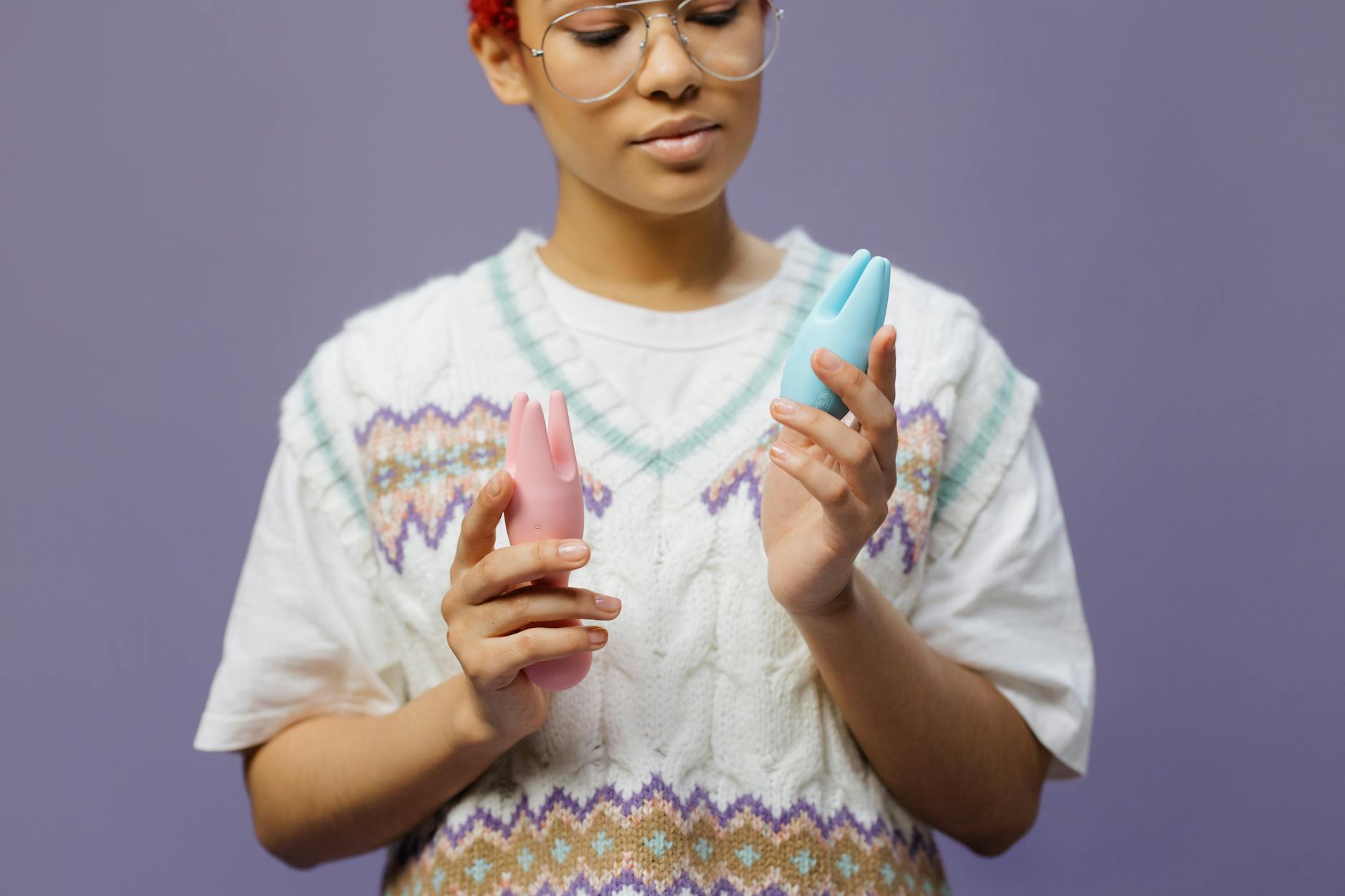
How to Use a Lemon Vibrator When Hormonal Shifts Change During Perimenopause
Let's be real: perimenopause is not a single experience. Your body in week one of your cycle looks nothing like your body in week three. One month your clitoris is hypersensitive. The next month it feels muted. One week you want to touch yourself for an hour. The next week you barely think about it.
This isn't dysfunction. It's perimenopause doing what it does: swinging hormones wildly while you're still menstruating, often for years before menopause officially arrives. Most people get zero guidance on how to navigate pleasure during this phase. That's what this post is for.
What actually happens to sensation during perimenopause
Perimenopause is the decade (sometimes more, sometimes less) when your ovaries start winding down production of estrogen and progesterone. Unlike menopause, which is a fixed point in time, perimenopause is a gradual, chaotic ramp down. Your hormones don't drop smoothly. They spike and crash unpredictably.
This directly affects how your clitoris responds to touch. Here's the chain reaction: estrogen influences blood flow to genital tissue, nerve sensitivity, and lubrication. When estrogen swings up, your clitoris feels more reactive, arousal builds faster, and orgasms often come easier. When it crashes, sensitivity flattens. Lubrication dries up. Arousal takes longer to spark.
The kicker? You might not know which version of your body you're going to wake up with. Some people find that sensitivity swings week to week. Others experience month-long stretches of the same baseline. A few lucky ones breeze through with barely noticeable changes. Most people fall somewhere in the messy middle.
The monthly mapping strategy that works
Instead of fighting the shifts, map them. Spend one full cycle (ideally two or three) tracking which days feel most responsive, which feel numb, and what your actual arousal pattern looks like.
You don't need an app or a journal unless you like that. Honest self-awareness is enough. Notice: On days when my period starts, does my clitoris feel tender or muted? After ovulation, when does sensitivity peak? Are there days when I have zero interest but my body responds great once I start? Are there days when I want it desperately but my body won't cooperate?
This data is gold. It removes the shame of "why doesn't this feel like it usually does" because you'll see the pattern. You're not broken. You're cycling through a much wider range than before.
Adjusting your lemon vibrator approach by hormonal phase
Here's how to work with your lemon clitoral vibrator across the month.
High-estrogen days (usually mid-cycle, around ovulation). This is when your clitoris tends to feel most alive. The tissue is plump with blood flow. Sensation is acute. Your lemon vibrator's suction feels intensely pleasurable. You can handle higher intensity settings (patterns 3-5 on the Lem) right away. Warm-up time is shorter. You might orgasm faster and more intensely. Trust that. Use it. These windows are often the easiest time to explore sensation or practice techniques you want to dial in.
Dropping-estrogen days (late luteal phase, right before your period). This is when many people feel the crash. Sensitivity flattens. Your clitoris might feel almost unreachable. This is not weakness. It's hormonal. Here's the play: start at pattern 1. Stay there for five to ten minutes before moving up. Your clitoris is still responsive, but it needs more patient stimulation to wake up. You might need a longer warm-up (20-30 minutes of general arousal before using the lemon vibrator). Your orgasm might take longer to build and feel different in texture (more subtle, less explosive). None of that is wrong. It's just what this phase offers.
Menstruation itself. Some people love vibrator use during their period. The suction can feel grounding or intensely pleasurable (some report deeper orgasms). Others find it uncomfortable or just not appealing. Both are normal. If you do use your lemon vibrator during menstruation, start with lower intensity and expect your comfort level might shift day to day. If you don't, that's fine too. Pleasure is optional every single day of your cycle.
The lube recalibration that changes everything
During perimenopause, lubrication becomes less reliable. Some days your body produces plenty. Other days it's sparse. A lot of people assume they're losing lubrication permanently and panic. Usually it's just cyclical.
If you're someone who didn't need lube before, perimenopause might introduce it. Water-based lubricant is your friend here. It doesn't damage silicone (your lemon vibrator is silicone). It adds glide without changing sensation. Apply it directly to your clitoris and the stimulator. Reapply as needed. This tiny adjustment often makes the difference between "this feels impossible" and "oh, there it is."
The other thing: don't wait until you're frustrated. Use lube preventatively on days when you know (from your mapping) that sensitivity is lower. You're not trying to fake arousal. You're removing mechanical friction so your nervous system can actually register pleasure.
Managing the desire-versus-response split
Here's the weirdest part of perimenopause that nobody talks about: sometimes your brain wants to touch yourself but your body doesn't cooperate. Sometimes it's the reverse. Your body is clearly capable of pleasure but your mind is elsewhere.
This isn't a sign to give up. It's information. If your desire is high but your response is slow, extend your foreplay. Use your lemon vibrator's lower settings for longer. Think of it as priming. If your response is immediate but desire is quiet, that's fine too. You don't need to feel "in the mood" to use a vibrator. Sometimes touching yourself creates the mood.
Many people report that once they start using the lemon vibrator, desire catches up. The stimulation triggers the neural pathways that signal "yes, this feels good." Your body and brain sync up. This is especially true during phases when natural arousal is sluggish.
When to see someone about the bigger picture
If your perimenopause shifts have also brought mood swings, sleep disruption, or significant relationship strain, a conversation with a healthcare provider makes sense. Not because pleasure itself is broken, but because perimenopause affects everything. Sometimes hormone therapy helps. Sometimes it's cognitive. Usually it's both.
If you're using your lemon vibrator and you're experiencing pain (not pressure, not intensity, actual pain), that's also worth checking with a clinician. Perimenopause can bring vulvodynia or other conditions that make direct clitoral stimulation uncomfortable. That's fixable, but it helps to know what you're dealing with.
Your pleasure during perimenopause is not a problem to solve. It's a practice to adapt. The lemon vibrator is a tool that works better when you understand your own monthly landscape. Once you do, you stop fighting the swings and start working with them.
FAQ: Hormonal shifts and clitoral vibrators
How do I know if my low sensation is hormonal or something else?
Low sensation that follows a clear pattern throughout your cycle (high arousal around ovulation, dip before your period) is usually hormonal. If it's consistent all month long regardless of where you are in your cycle, that might point to something else like stress, relationship dynamics, or medication side effects. That said, the boundary isn't always clean. Hormonal shifts often amplify existing issues. Mapping your cycle helps you see the difference. If you can't find a pattern after three months of tracking, or if numbness gets worse over time, talk to a healthcare provider.
Can I use my lemon vibrator if my hormonal shifts are being managed with medication?
Absolutely. Hormonal medications (including birth control, progesterone therapy, or hormone replacement) don't make vibrator use unsafe or less effective. Your sensation might feel different than before medication, but the lemon vibrator still works. You might need to adjust intensity or warm-up time based on how the medication shifts your baseline sensitivity. Same mapping strategy applies.
What if my partner doesn't understand that my desire fluctuates so much during perimenopause?
This is actually a conversation-not-a-vibrator problem, but the vibrator can help. If your partner understands that your fluctuation is biological and predictable, not about them, it shifts the dynamic. Some couples find it helpful to talk about the cycle explicitly: "This week I'll probably want more foreplay before the vibrator feels amazing. Next week I might want to skip it entirely. Both are normal for me right now." That takes out the guessing and rejection-fear. Your lemon vibrator can be part of solo pleasure or partnered play, depending on what your body needs that day.
Is it normal for orgasms to feel different during different times of my cycle?
Completely normal. During high-estrogen phases, orgasms often feel more muscular and intense. During lower-estrogen phases, they might feel subtler or more localized. Some people orgasm faster during one phase and slower during another. The sensation can vary from deep and full-body to quick and focused. None of those is better or worse. They're just expressions of your hormonal state. Many people start preferring the subtler orgasms once they get used to them.
Should I take a break from my lemon vibrator if my sensitivity is low?
Not necessarily. Taking a break sometimes helps reset sensation, but it's not required. Some people find that consistent, gentle use during low-sensitivity phases actually helps maintain neural pathways and keeps arousal responsive. The key is adjusting intensity and expectation, not stopping altogether. If you're feeling frustrated or pressured, taking a week off can feel good. If you're feeling curious about whether your body will respond, going slow with the lemon vibrator can be grounding. Let your actual desire guide that choice, not a rule.
Can hormonal fluctuations during perimenopause cause pain with vibrator use?
Yes, sometimes. Some people develop temporary vulvodynia or increased sensitivity to direct touch during certain phases. This usually settles down when hormones stabilize again (after menopause). In the meantime, you might need to use your lemon vibrator over clothing, or switch to the lowest intensity, or use it only during higher-estrogen phases. You might also need to take a break from it altogether for a few months. If pain persists beyond a cycle or two, or if it's getting worse, see a healthcare provider. There are treatment options.
You're navigating this the right way
The fact that you're thinking about how to use a lemon clitoral vibrator in conversation with your actual hormonal reality means you're already three steps ahead. Most people just assume their body is broken and stop exploring. You're staying curious. You're adjusting. That's exactly what perimenopause demands.
Your pleasure during this decade is not a given. It's not guaranteed to feel the same as it did before. But it's not gone either. It's shifting. And a tool like the lemon vibrator, paired with honest attention to your own cycle, can help you stay connected to sensation and arousal even as your body changes. That's the real work of perimenopause: not fighting the shifts, but understanding them and adapting your practice accordingly.
If you want to explore your pleasure more deeply during this phase, especially if hormonal shifts are affecting your relationship or sense of self, reach out. That's exactly what I work on with people navigating midlife transitions.